Tuesday, December 1, 2009

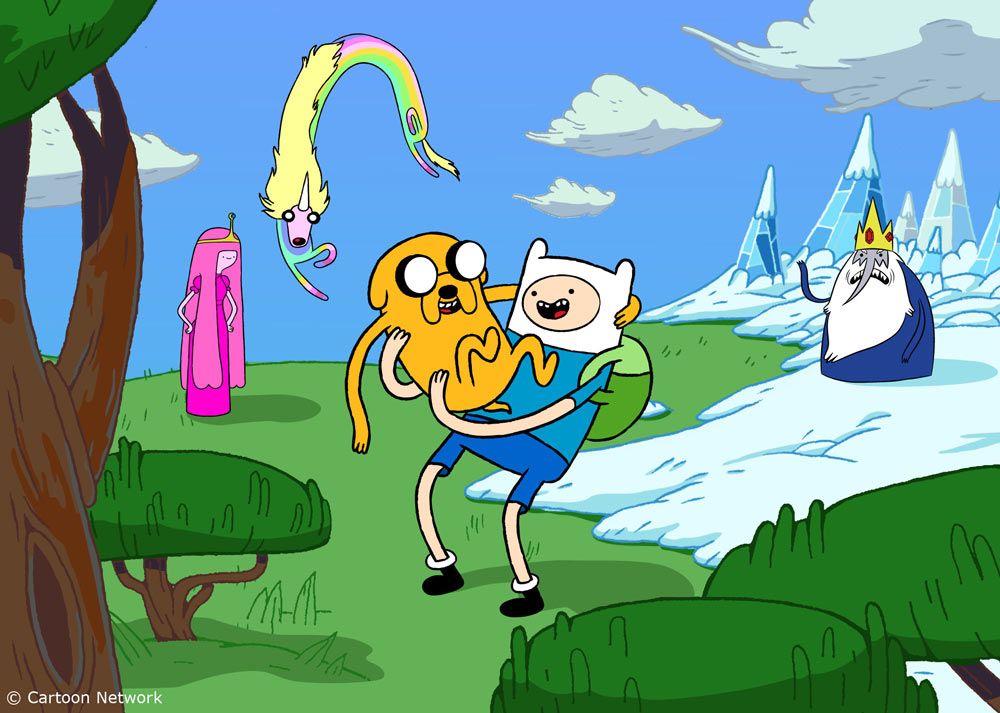
WATCH THIS SHOW: Adventure Time With Finn and Jake


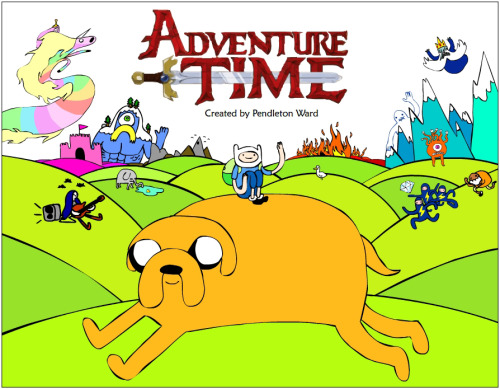
I have stumbled across a true gem that I feel is my duty to share with everyone. This is a new show, to debut in March, titled Adventure Time with Finn and Jake. Adventure Time chronicles the adventures of Finn (a boy) and Jake (his magical dog) as they journey across the epic and imaginative land of Ooo looking for wrongs to right and evil-doers to stop. Their main foe, the Ice King, controls his ice kingdom and they get in hilarious battles along the way. The show will debut on Cartoon Network this March, and is sure to be an instant classic.

Part of the reason I love Adventure Time so much is because of it's off-beat humor. It's similar to the type of comedy that Wes Anderson has made a name for himself off of. When completing an awesome task, like saving Princess Bubblegum, Finn will frequently yell "Mathematical!" or "Rhombus!" as a way of expressing his extreme happiness.

I first discovered Adventure Time on youtube, almost 2 years ago, as Pendleton Ward, the creator, had posted his short pilot of the show. The ridiculous comedy and imaginative characters and situations that come from this guy's head are amazing to watch.

Watch the short here...


In the past, I've had Youtube embedded videos pulled from my blog, so I'm also posting a link to it...

WATCH THE MOST AWESOMEST AND MOST FUNNIEST SHORT EVERRRRRR!!!!

-Brian

Zemeckis' "A Christmas Carol" Dazzled My Senses


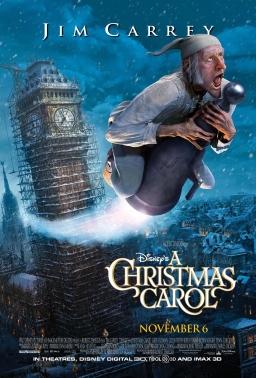
One of Disney's biggest releases this holiday season is the new film written for the screen and directed by Robert Zemeckis, titled A Christmas Carol. The film uses some of the most advanced 3D technology, but was shot with real actors using performance capture.

One of the reasons the film works so well, in my opinion, is because of the brilliance of Jim Carrey. Carrey plays the lead, Ebeneezer Scrooge, and also plays the Ghost of Christmas Past, Present, and Future. His incredibly expressive face was covered in small white motion capturing balls, than then transfer his movements, however subtle, back to a computer to be edited. Jim Carrey's infamous ability to morph his face to any form is what made all of his characters stand out, and what the made the characters in the film seem so realistic.

For example, view the image to the left for the incredible transition from real life to cinema that Zemeckis was able to do using his performance capture technology. Still, it wasn't just Carrey's facial expressions that made his performance work. The performance capture process is able to mimic body movements as well. Even the nervous twitching of fingers, that Carrey as an actor, does will translate to the screen and add detail and depth to his character.

This care for detail was taken to great extents by Robert Zemeckis as well. He made sure that every small detail of each shot was planned out, and added great depth and environment to each scene. The original artwork for the film, shown in the picture (right), is a wonderful example of Zemeckis' attention to detail. Each individual
snowflake was created and rendered to fall at a realistic pace in the film. Chimney smoke rises from the homes in the background, and men riding horse-drawn carriages are everywhere.

All of the extreme care to detail in environment, acting by Carrey, and the incredibly nature of Performance/Motion capture technology made A Christmas Carol worthwhile to see, to me. Many of my peers had an initially negative reaction to the film because it's incredibly stylized nature, but for me, that's what I enjoy about it.

-Brian

Wednesday, November 25, 2009

Blog Post 6- Recipe For Disaster: Stop Motion Group Project


"Recipe for Disaster" is the group project that myself, Caitlin Disney, Molly Burgess, and Brittany Habel completed. In my time at USC, I had never created a stop-motion film, and we all thought it would be something fun and interesting to do as a team. Additionally, our group was basically built as a film crew. I am a filmmaker, so I could direct and edit the film, Caitlin is a photographer so she could shoot it, Molly is a graphic designer and has worked as production designer on a film so she was able to set dress and art design it, and Brittany is an actress so we had our star. All of our respective talents complemented each other in a way that the natural choice for us was to make a short film. Still, we wanted to do something that was original and not a typical film, so we went the stop-motion route.

It is hugely important to recognize a film is simply 24 photographs per second, taken in rapid succession, and then played back to give the appearance of movement. Cinema works because our eyes use persistence of vision to connect the images together and they all appear to be continuous.

Once we decided we wanted to do a stop-motion film, I remembered that I had NO IDEA how to make one. So, I began to research. One site that I read and referenced was a simple E-how page on how to create a stop-motion film...

HOW TO MAKE A STOP MOTION FILM!

Besides that, I watched a youtube video as well...


After the research, I realized that it was definitely possible to complete, we just had to commit A LOT of free time to it, which my group was more than willing to do.

My Personal Role on the Film: Co-Writer, Director, Editor

So, as a group, we knew that the movie had to involve inanimate objects attacking our main character. Quite simply, that's what's funny about stop-motion films. We all decided that it should be about a young woman baking cookies, and then the ingredients attempt to escape. Once we had this idea, I set off to write the script. I knew I would have to pick a couple key ingredients to stage this, so I chose the eggs as the leaders of the group and the first to escape. Then, I chose to have the vanilla extract be the secondary character who would distract Brittany while the others made their getaway. I wrote a couple versions of the exact action that would take place, and sent them all to my group. After this, we collaborated and talked about small parts to change and we added visual gags to the script. Once we had a finalized script, it was my job to create a shot list and a visual style for the film as director.

This was one of the most difficult parts of the process, as I had to edit the film in my mind before we shot, because every photo had to be shot in order. Otherwise, the editing process would have taken years as I tried to find pictures and match them up together. So, I watched the movie in my mind, and made a corresponding shot list. I took special attention to think about how long each shot should last as well, because that affected how many pictures we would take from each respective position. I knew we needed 12 photos for each second I wanted a shot to last, so if I needed one angle to be on screen for 3 seconds, we tried to take 36 pictures, moving the subject a little bit between each take. It made for A LOT of pre-production work and planning, so that I knew exactly what shots to get and how long each should be on screen.

We ended the six-plus hour shoot with over 700 pictures, which was almost exactly what I was planning on from the start, so it worked out well.

After this, I had the task of editing, which actually wasn't too bad because I had already done most of the work in pre-production. We simply made sure the photos came out in titled in sequential order, so that I could import them as a batch and they naturally came one after the other. All I had to do was choose a proper framerate to play them back at, and then cut out a few pictures, hold on some longer, put in a few transitions and titles, and add a soundtrack. All in all, the editing really only took a couple hours and was very simple.

In the end, I'm happy with our final product. Our main goal when we set out was to make a fun short film that would make people laugh, and which would see inanimate objects move to attack our actress. Hopefully, you'll laugh when you watch it, and for the right reasons.

As always, making a film is a collaborative effort, and it made for the ideal team project.

-Brian

Thursday, November 19, 2009

Artist Statement: A Vision of Teamwork

Growing up, I was always the kid in the neighborhood to organize epic basketball tournaments that pitted one group of friends against another. We played these games as if our lives depended upon it, with our competitive nature oozing out of us. It sounds simple, but it was here, that I learned about teamwork and collaboration. One game you can be a star and the next a role player. Either way, we always had our teammates to fall back on whether we won or lost, and I’ve always loved that aspect of sports.

I still remember the lessons I learned on the basketball court because they have impacted how I make films. As a filmmaker, the most important part of the process, to me, is collaboration and working as a team. When I set out to make a film one of the first things that runs through my mind is what kind of crew can I put together. It takes a special blend of leaders and role players, strong personalities and quiet ones, all combined to work towards a common goal.

As a result, depending on which position I’ve taken on a film crew, my art can vary and mean entirely different things to me. As producer, I am the veteran of the team, and oversee all aspects of the movie and try to make sure everyone is happy while all departments are getting what they need. It’s sort of a CEO of the business approach, and is far more management-like than creative at times. Still, a creative producer can find ways to save money, get props and equipment for cheap, and still deliver a director what he or she needs.


As director, I am the team captain, out there to lead my crew in the pre-production phases, on set, and in the editing room. I know I must be forceful with decisions, so that others will follow, and I need to work twenty times harder than every other member of the crew, while retaining and fighting for my creative vision of the film.


As a writer, it is my job to give a director and producer a great story filled with vibrant images and actions that tell a complete story. I also like to be involved in the pre-production phases, helping the director come up with new scenes that might inject more comedy into a scene, or put more at stakes for a character to make a situation more interesting.


Depending on my role my art can take countless forms and mean different things to me along the way. Still, the most important thing to remember, to me, is that I’m just one piece of a very large puzzle working on a film. It endlessly frustrates me when directors put a possessory credit on their films. For example, “A James Cameron Film” or a “Steven Spielberg Film.” Surely, there is no doubt that these directors have put the most time and effort into the film and are responsible for the overbearing creative vision, but I feel it undermines all the collaborative effort that the writers, producers, cameramen, production designers, editors, gaffers, and all other crew members contribute.

At the time, I didn’t realize the magnitude of the lessons I learned growing up playing sports, but they are all relevant in filmmaking. Working as part of a team in a collaborative nature is what I love most about the art of filmmaking and even though my position might change from project to project, I know that my mentality won’t.

-Brian

Tuesday, November 10, 2009

My Writing Samples: Selected Portions of A1 and A2

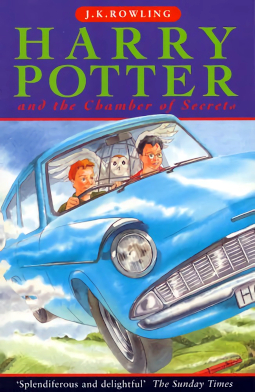
I have decided to post a selected portion of Assignment 1 and Assignment 2 to my blog for perusal. Specifically, I wanted to post my introduction to A1. It was a very impactful day in my life, and I can still remember it vividly. I can remember it as being the day that creating and writing stories became the most important thing to me. Even if I was simply writing an alternate ending to Harry Potter and the Chamber of Secrets, I still cared more about that than anything else at the time. It continued to stick with me, because only a year later, I had pretty much quit the competitive sports I'd played the last 11 years and bought a movie camera. Then, I started making movies...
---------------------------------------------A1------------------------------------------------------

Beads of sweat drip from my forehead, down onto my hand which is writing at a furious pace, and then down again onto the sheet of exam paper. The midterm Spanish exam in Mrs. Alexander’s class has all of Clackamas High School shaking in fear, but it is the last thing on my mind today. The air conditioning in the classroom being broken contributes to my sweat, but it is mostly due to the fact that I have only half-finished my newest work of art. It is an alternate ending to Harry Potter and the Chamber of Secrets, only filled with vulgarity, rap battles between Dumbledore and a Basilisk and ripe with Lord of the Rings references. All I can think about during my Spanish midterm is how I could possibly fit an extra verse into the rap battle without disrupting the flow of the piece as a whole. What if Dumbledore is eaten alive by the snake in the middle of his line about scorching the snake’s innards? What if his rap is just a distraction as Harry sneaks around to stab the creature from behind?

My pen is screaming across the paper of my notebook and I look up to notice that I’ve finished the test thirty minutes earlier than any of my classmates. It is the awkward time after being the first student to finish an exam. If I turn it in now, will the class think I’m being a know-it-all? Will the teacher think I am careless and rushed through it? Oh, shit, who cares…I just want to write this Harry Potter ending anyways. I look around the room trying to see if anyone else is done. The worry and confusion blanketing my colleague’s faces is quite comical to me. One student, Josh, pulls at his long-brown hair like he’ll never be able to touch it again. Emily sits next to him and continually writes something, only to erase it and rewrite something else, only to erase it again because she is unable to commit to any answer. I look back to my half-finished Harry Potter ending and focus for the remaining thirty minutes. After class ends, I race over to my friend Mychal’s desk to show him the product of my mind’s ridiculous need to warp Harry Potter into my own invention. A long smile etches across his face and genuine laughter immediately follows. I know the time spent during my exam was a success.


-------------------------------------------End A1---------------------------------------------

I decided to only a small portion of A1 because I'd prefer to discuss A2. It's more recent, and is about a project that I made only one semester ago. For my intermediate production class I made a film called "Motion Picture Love." Due to the Cinema School owning the copyright of the film, I am unable to post the actual film on my blog, so you'll just have to settle for the paper describing my process. We shot the whole thing on the Arri-S camera, which made for some unique production problems. Because it was so noisy, we had to edit in each individual sound effect for the film (often times recording them ourselves). Additionally, it was my first time working with film, and so I had to learn about f-stops, and manual focusing, and all that fun stuff as well. I don't discuss these things in my paper, I just wanted to bring them up, because I think they are interesting side-notes to the filmmaking process.

In the paper, I mostly focus on the process of trying to combine three separate genres into one film, but still make it cohesive and interesting. It was a fun task, and I highly recommend it to anyone that enjoys multiple kinds of films and doesn't want to stick to one genre.

------------------------------------------------A2----------------------------------------------


Schizophrenic Cinema

1. At the time of production, if someone were to question me about the type of film I was directing in my intermediate production course at USC I would not know exactly how to describe its genre. Romantic? Check. Comedic? Check. But, there are ninjas and hippies as well! Generally, a film can be identified by one genre. For example, a Western film is almost always only a Western. More specifically, Clint Eastwood's character in the Good, the Bad, and the Ugly (and the rest of the series) is typical of the Western. The way he constantly puffs his cigarillo and flashes those infamous steely eyes from under his black hat has helped to define the Western genre in film. The horse he gallops around on, the metallic clang of his spurs, and his stone-faced and closed off personality have all become stalwarts of the Western as well. All of these characteristics make up the iconography of the Western and when an audience is exposed to it they instinctively know they are watching a Western film. Furthermore, they assume that these conventions will be implemented throughout the film in a consistent manner from start to finish to maintain an environment that is truthful to the characters and narrative. Clint Eastwood would never stop mid-gun sling to break into a song about the desert heat and corrupt sheriff! Personally, that idea of Clint breaking character fascinates me, and it is precisely what I wanted to explore when writing, producing, and directing my film titled, Motion Picture Love.


Break...

3. Comedy is undoubtedly the most open genre because almost any scene can employ comedic elements, and as a result I exploited this as a framework to move back and forth between genres throughout Motion Picture Love. Still, comedy is not enough to transition an audience from an intimate two-person smoking scene to a rooftop ninja battle. For that, it is essential to have a relatable character. My lead figure is an everyday standard movie theater employee. He mops floors to a sparkle, sells concessions with enthusiasm, and tears tickets with authority. His name is Eric. One day, the most stunningly elegant and beautiful young woman walks into Eric's theater. Having spent most of his years maturing in this very movie house Eric has no idea how to approach this heavenly being, but he does know how they do it in the movies. So, being a perpetual day-dreamer, Eric stares into the posters on the “New Releases” wall of his theater and his mind wanders into the new stoner film, “Higher Love.”

4. By the time the film enters the stoner scene the audience recognizes Eric as the lead and can feel comfortable moving with him into a new setting, as the world of a stoner-version of Eric unfolds. I chose to initiate the audience into Eric's daydreams with a sensual smoking scene because it is a simpler notion to understand than being a ninja, as Eric is later in the film. Additionally, the stoner film has a calmer atmosphere that I could apply to ease my audience into the style and conventions of the film. Just like Clint Eastwood in the Western, Eric proudly displayed the iconography typical of the stoner film. Headband, circular glasses, never-ending smile, constantly suppressing giggles, and clothing that represented the entire color spectrum. It was also a natural first choice because, quite simply, marijuana is hilarious. Observing its effects on characters on-screen is a pretty reliable source of laughter if depicted correctly.

5. The first shot of the stoner scene displays Eric fully clad in an outfit typical of Jimi Hendrix using an open flame to spark a 5-inch joint, and the exaggerated use of these costumes and props immediately tells the audience this scene is supposed to be funny. This allows the movie-goer to feel comfortable laughing at the content of the film, and hopefully they are laughing for the correct reasons. I knew my stoner scene simply had to be funny or the rest of the film would fall flat and not work on any level.

6. It was not enough to have the stoner scene be funny, I also needed it to vastly differ from the first scene so that the audience could believe Eric was really in a new place as an entirely unique person. To help the stoner scene stand out visually, I filmed the opening scene in the movie theater with very dark and neutral tones. The score was overly dramatic and excessive, and the action was Eric's girlfriend dumping him. The style is not representative of a real-life situation, and casually the audiences' disbelief is suspended farther than normal. The intention was to contrast completely with the stoner scene so that the audience would naturally feel lifted when we escaped the theater through Eric's daydream. The color palette of the stoner scene is dominated by various shades of orange and the action takes place between two characters intimately sharing a moment on a couch. A poster is openly displayed on the back wall donning the phrase, “A friend with weed is a friend indeed.” Everything from lighting to the position of actors to the specific moments of laughter in the scene was planned to create a warm and comfortable atmosphere where the audience could feel comfortable laughing at Eric's new characteristics and recently obtained courage. Watching Eric transform from a nerdy theater employee to a master of seduction (in his mind) is a naturally comical adjustment, especially when framed within the stoner setting. Of course, I could not have Eric succeed in his first trial at captivating the flawless young woman who entered his theater, and something goes humorously wrong at the end of the scene. As a result of lulling the audience into complacency and engaging them (hopefully) on a comedic level throughout the stoner scene they now feel invested to continue the film even though Eric's first attempt failed. Furthermore, this is where the importance of having a relatable character that the audience is intrigued by comes into play.

7. As long as the next scene is funny the comedy allows me to ignore the conventional idea of sticking within one genre, but the main character is still necessary to guide the audience emotionally and to give them something to care about during the transition through scenes. Because they watched Eric in the stoner scene, they are willing to watch him in a completely different environment, as a vastly different character, when he is depicted as a ninja mere moments later. The audience's emotional connection to Eric naturally inclines them to root for him as he battles for the woman he loves on a rooftop while he is day-dreaming about the newest samurai film “Knockout Ninjas.”

---------------------------------------------End A2-------------------------------------------

As you can see, it was the days in my Spanish class re-writing Harry Potter that led me to cultivate my ideas and develop them into something tangible. I've come a long ways since then, and have started analyzing film to the point that I consciously attempted to play with genre when I got to film school. It's made for an awesome time.

-Brian


Sunday, November 1, 2009

Blog Post 3: Narrative vs. Metaphor in Where The Wild Things Are


Where the Wild Things Are is a truly magical film that transports the viewer, regardless of age, back to the complexities of childhood through a simple, but touching, tale. The film was adapted from the popular children's book by Maurice Sendak.

The story is told from the point of view of Max, a young boy with a quick temper and a vivid imagination. As the story unfolds it paints Max as a loner with no one to turn to except his incredible subconscious. As a result of being told through the eyes of a child the story is erratic and simplistic, but with wonderful consequences.

Classical Hollywood cinema has always been predicated on narrative, or a set story. Specifically, it can be described as, "Classical narration progresses always through psychological motivation, i.e. by the will of a human character and its struggle with obstacles towards a defined goal. (1)" Think of almost any major studio picture you see in the theaters today, and it will follow that simple rule of narrative cinema. As filmmakers at USC, our professors have ingrained the notion of story, logical progression, and characters' plot goals into our writing because that is what is made in the industry today and what is generally the most compelling type of film. Where the Wild Things Are drastically breaks from Classical Hollywood Cinema, but instead of being flat and underdeveloped, the metaphors discussed are both realistic and incredibly magical.

The film opens with Max, playing in the real world, but ostracized by his sister and her older friends. He loses control of his temper, and trashes his sister's room, and then causes a ruckus at dinner, only to be sent to his bedroom without dinner. Max runs away, and his emotions follow him to a shore where a raft awaits him. Once we hit the shore, as an audience, we enter Max's mind and confront the complexities of his personality as they are externalized through the Wild Things. Each Wild Thing represents a different aspect of Max's emotion. Carrol is quick to anger and constantly lashes out at the others, similar to Max in the first scene with his sister when a playful game goes wrong. KW is the very caring and supportive side of Max. Which, keeping with Max's true personality, is a sort of veiled figure throughout the film, only appearing at specifically chosen times, and not present for large portions. Also, there is Judith, a self-proclaimed stubborn Thing that only brings up the negatives to ideas and adventures. As the film progresses all of these Wild Things (Max's personality traits) clash with each other beautifully to paint a very original picture of what it's like inside the mind of a child. The film uses these metaphors to push the film along, rather than a well-established narrative.

In fact, to me, a strong narrative isn't really present throughout the film at all. The "plot" once Max reaches where the Wild Things are, is not typical of a major studio film today. Max is crowned King of the Wild Things, and then they set out to build a large fort for them all to live in, "where only the things they want to happen, would happen." Large portions of the time spent with the Wild Things is watching them cause a ruckus, playing off each other, and freely destroying trees or sleeping in large piles together. Max leads the Wild Things as they build the fort, until Carrol becomes upset with KW and Max for letting outsiders in, and then Max decides it's time to leave. The simplicity of Max's goal, to build a fort, is met with few obstacles and conflicts along the way. But, sticking to the metaphorical nature of the Wild Things' storyline, all conflict arises from the Wild Things battling each others' personalities. It's a visual reminder of how a child's mind deals with the natural issues of right and wrong, acceptance, and loneliness.

Part of the reason I wanted to write about this film, is because of the odd nature of criticizing it. After the film had ended I was unsatisfied, and literally found myself thinking, "wait, this can't be over yet, they haven't really done anything." But, that is what is so extraordinary about this film. The audience is transported from their seats to another world to play with the Wild Things for 50 minutes, and then taken back to the real world with Max, simple as that. The story drags at parts and becomes boring as I grew tired of watching the Wild Things interact with Max rather than heading off to save one of their friends on an adventure in an intricate story-line. Still, it's difficult to take those feelings seriously, because that would have gone completely and entirely against the direction of the film. It's a different kind of film, and it greatly succeeded at what it was attempting to do; show us the mind of child. In the end, it felt to me as if nothing had happened, but as the facets of Max's personality clash where the Wild Things are, so much happens.

-Brian

This is the one of the trailers for the film, and it is quite honestly the best film trailer I have ever seen. The quick pace, how it moves through the story, and how each emotion of Max is represented both through the images and song is really quite moving. Especially if you've seen the film.

NOTE: I would embed the trailer, BUT, the last time I did it was removed from my blog post due to usage violations, and the trailers (even on youtube) have disabled the "embed link."

So you'll just have to settle for clicking on this...

TRAILER: WHERE THE WILD THINGS ARE


Sources:
(1)- "Classical Hollywood Cinema." Wikipedia. 16 Oct. 2009. Web. 31 Oct. 2009.
Saturday, September 26, 2009

Blog Post 1- Peter Jackson: Special Effects Serving Character


Peter Jackson is a master of blending special effects and character to serve the overall narrative piece. Like many of my colleagues, his work in The Lord of the Rings inspired me to attend film school and has been a guiding influence in my creative endeavors. Particularly, I am fascinated by Jackson's ability to create a film of epic proportions with comprehensive battles, but still have a focus on character and the relationships between the people in the story.

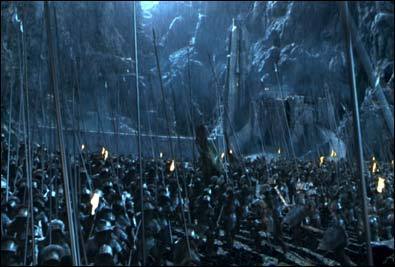
Part of the reason Jackson is so talented at creating and implementing special effects is because he's been doing it since he was a child. On Jackson's first feature film, Bad Taste, he actually created a lot of the special effects himself. In one scene, they had an alien drinking vomit, and Jackson used a mixture of muesli and green food coloring to create the prop. Jackson's success with special effects led him and his co-workers to found an effects company called Weta Digital. With the success of the first Lord of the Rings film, Jackson's Weta was able to gain instant funding to pursue research on new special effects. This led to the creation of the Massive program. Jackson used the Massive software to create academy award-winning visual effects for the battle scenes for Lord of the Rings. It was a combination of this software and Jackson's extreme dedication to detail in costume and set design that gave Lord of the Rings its incredible atmosphere.

Here is an example of a finished photo, completed with the Massive software, from Lord of the Rings: The Two Towers:


Another picture example, witch each individual layer, click here...(It won't let me embed image)

EXAMPLE OF HOW EACH LAYER OF A SHOT IS COMPOSED IN A BATTLE SCENE

Lastly, here's an example of Weta's work in creating special effects-laden environments for some of Jackson's films. The opening sequence is from the third installment of Lord of the Rings...

Weta Digital's Environment Example


With scenes like these, Jackson accomplished the creation of a fantasy world that drew audiences in and made them forget they were in theaters. These effects aren't completely groundbreaking, but Jackson's use of them to supplement the story is. Jackson never places such prominence on the use of special effects that the story suffers, and that is why I have such strong admiration for him. Even though he's using state of the art technology and software, he refuses to overlook the most important thing: character.

A perfect example of Jackson blending character and special effects is Aragorn's ending speech in the Return of the King. Aragorn rides up on his horse amidst heavy special effects. There's an ominous mountain in the background, a black swirling sky, and computer-generated towers surrounding him. Still, in the writing process, Jackson wrote a speech to allow Aragorn to express his character and to rally his troops. It is my absolute favorite film speech, because of the heart with which it is delivered, and because of the epic backdrop of the scene. Jackson's allows enough time for the scene, and speech, to build emotionally so that by the end it carries great weight emotionally for the audience.

Peter Jackson is my favorite filmmaker for scenes like this speech. One of the things that bothers me most with recent films is their tendency to rely on special effects to carry a story, rather than to complement a story. Jackson's primary focus is characters and how they interact with each other, and in my opinion, that's the only thing that can truly make a great film.

Without further explanation, here it is...


ARAGORN'S BATTLE SPEECH


Note: I previously embedded the video in my post but it was removed almost immediately, so you'll have to settle for clicking the link!

-Brian