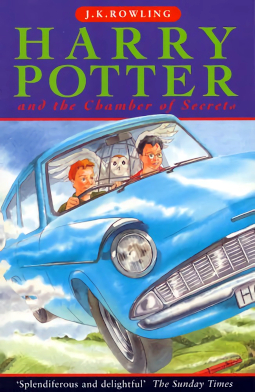
 I have decided to post a selected portion of Assignment 1 and Assignment 2 to my blog for perusal. Specifically, I wanted to post my introduction to A1. It was a very impactful day in my life, and I can still remember it vividly. I can remember it as being the day that creating and writing stories became the most important thing to me. Even if I was simply writing an alternate ending to Harry Potter and the Chamber of Secrets, I still cared more about that than anything else at the time. It continued to stick with me, because only a year later, I had pretty much quit the competitive sports I'd played the last 11 years and bought a movie camera. Then, I started making movies...
---------------------------------------------A1------------------------------------------------------
Beads of sweat drip from my forehead, down onto my hand which is writing at a furious pace, and then down again onto the sheet of exam paper. The midterm Spanish exam in Mrs. Alexander’s class has all of Clackamas High School shaking in fear, but it is the last thing on my mind today. The air conditioning in the classroom being broken contributes to my sweat, but it is mostly due to the fact that I have only half-finished my newest work of art. It is an alternate ending to Harry Potter and the Chamber of Secrets, only filled with vulgarity, rap battles between Dumbledore and a Basilisk and ripe with Lord of the Rings references. All I can think about during my Spanish midterm is how I could possibly fit an extra verse into the rap battle without disrupting the flow of the piece as a whole. What if Dumbledore is eaten alive by the snake in the middle of his line about scorching the snake’s innards? What if his rap is just a distraction as Harry sneaks around to stab the creature from behind?
My pen is screaming across the paper of my notebook and I look up to notice that I’ve finished the test thirty minutes earlier than any of my classmates. It is the awkward time after being the first student to finish an exam. If I turn it in now, will the class think I’m being a know-it-all? Will the teacher think I am careless and rushed through it? Oh, shit, who cares…I just want to write this Harry Potter ending anyways. I look around the room trying to see if anyone else is done. The worry and confusion blanketing my colleague’s faces is quite comical to me. One student, Josh, pulls at his long-brown hair like he’ll never be able to touch it again. Emily sits next to him and continually writes something, only to erase it and rewrite something else, only to erase it again because she is unable to commit to any answer. I look back to my half-finished Harry Potter ending and focus for the remaining thirty minutes. After class ends, I race over to my friend Mychal’s desk to show him the product of my mind’s ridiculous need to warp Harry Potter into my own invention. A long smile etches across his face and genuine laughter immediately follows. I know the time spent during my exam was a success.
-------------------------------------------End A1---------------------------------------------

I decided to only a small portion of A1 because I'd prefer to discuss A2. It's more recent, and is about a project that I made only one semester ago. For my intermediate production class I made a film called "Motion Picture Love." Due to the Cinema School owning the copyright of the film, I am unable to post the actual film on my blog, so you'll just have to settle for the paper describing my process. We shot the whole thing on the Arri-S camera, which made for some unique production problems. Because it was so noisy, we had to edit in each individual sound effect for the film (often times recording them ourselves). Additionally, it was my first time working with film, and so I had to learn about f-stops, and manual focusing, and all that fun stuff as well. I don't discuss these things in my paper, I just wanted to bring them up, because I think they are interesting side-notes to the filmmaking process.
In the paper, I mostly focus on the process of trying to combine three separate genres into one film, but still make it cohesive and interesting. It was a fun task, and I highly recommend it to anyone that enjoys multiple kinds of films and doesn't want to stick to one genre.
------------------------------------------------A2----------------------------------------------

Schizophrenic Cinema
1. At the time of production, if someone were to question me about the type of film I was directing in my intermediate production course at USC I would not know exactly how to describe its genre. Romantic? Check. Comedic? Check. But, there are ninjas and hippies as well! Generally, a film can be identified by one genre. For example, a Western film is almost always only a Western. More specifically, Clint Eastwood's character in the Good, the Bad, and the Ugly (and the rest of the series) is typical of the Western. The way he constantly puffs his cigarillo and flashes those infamous steely eyes from under his black hat has helped to define the Western genre in film. The horse he gallops around on, the metallic clang of his spurs, and his stone-faced and closed off personality have all become stalwarts of the Western as well. All of these characteristics make up the iconography of the Western and when an audience is exposed to it they instinctively know they are watching a Western film. Furthermore, they assume that these conventions will be implemented throughout the film in a consistent manner from start to finish to maintain an environment that is truthful to the characters and narrative. Clint Eastwood would never stop mid-gun sling to break into a song about the desert heat and corrupt sheriff! Personally, that idea of Clint breaking character fascinates me, and it is precisely what I wanted to explore when writing, producing, and directing my film titled, Motion Picture Love.
Break...
3. Comedy is undoubtedly the most open genre because almost any scene can employ comedic elements, and as a result I exploited this as a framework to move back and forth between genres throughout Motion Picture Love. Still, comedy is not enough to transition an audience from an intimate two-person smoking scene to a rooftop ninja battle. For that, it is essential to have a relatable character. My lead figure is an everyday standard movie theater employee. He mops floors to a sparkle, sells concessions with enthusiasm, and tears tickets with authority. His name is Eric. One day, the most stunningly elegant and beautiful young woman walks into Eric's theater. Having spent most of his years maturing in this very movie house Eric has no idea how to approach this heavenly being, but he does know how they do it in the movies. So, being a perpetual day-dreamer, Eric stares into the posters on the “New Releases” wall of his theater and his mind wanders into the new stoner film, “Higher Love.”
4. By the time the film enters the stoner scene the audience recognizes Eric as the lead and can feel comfortable moving with him into a new setting, as the world of a stoner-version of Eric unfolds. I chose to initiate the audience into Eric's daydreams with a sensual smoking scene because it is a simpler notion to understand than being a ninja, as Eric is later in the film. Additionally, the stoner film has a calmer atmosphere that I could apply to ease my audience into the style and conventions of the film. Just like Clint Eastwood in the Western, Eric proudly displayed the iconography typical of the stoner film. Headband, circular glasses, never-ending smile, constantly suppressing giggles, and clothing that represented the entire color spectrum. It was also a natural first choice because, quite simply, marijuana is hilarious. Observing its effects on characters on-screen is a pretty reliable source of laughter if depicted correctly.
5. The first shot of the stoner scene displays Eric fully clad in an outfit typical of Jimi Hendrix using an open flame to spark a 5-inch joint, and the exaggerated use of these costumes and props immediately tells the audience this scene is supposed to be funny. This allows the movie-goer to feel comfortable laughing at the content of the film, and hopefully they are laughing for the correct reasons. I knew my stoner scene simply had to be funny or the rest of the film would fall flat and not work on any level.
6. It was not enough to have the stoner scene be funny, I also needed it to vastly differ from the first scene so that the audience could believe Eric was really in a new place as an entirely unique person. To help the stoner scene stand out visually, I filmed the opening scene in the movie theater with very dark and neutral tones. The score was overly dramatic and excessive, and the action was Eric's girlfriend dumping him. The style is not representative of a real-life situation, and casually the audiences' disbelief is suspended farther than normal. The intention was to contrast completely with the stoner scene so that the audience would naturally feel lifted when we escaped the theater through Eric's daydream. The color palette of the stoner scene is dominated by various shades of orange and the action takes place between two characters intimately sharing a moment on a couch. A poster is openly displayed on the back wall donning the phrase, “A friend with weed is a friend indeed.” Everything from lighting to the position of actors to the specific moments of laughter in the scene was planned to create a warm and comfortable atmosphere where the audience could feel comfortable laughing at Eric's new characteristics and recently obtained courage. Watching Eric transform from a nerdy theater employee to a master of seduction (in his mind) is a naturally comical adjustment, especially when framed within the stoner setting. Of course, I could not have Eric succeed in his first trial at captivating the flawless young woman who entered his theater, and something goes humorously wrong at the end of the scene. As a result of lulling the audience into complacency and engaging them (hopefully) on a comedic level throughout the stoner scene they now feel invested to continue the film even though Eric's first attempt failed. Furthermore, this is where the importance of having a relatable character that the audience is intrigued by comes into play.
7. As long as the next scene is funny the comedy allows me to ignore the conventional idea of sticking within one genre, but the main character is still necessary to guide the audience emotionally and to give them something to care about during the transition through scenes. Because they watched Eric in the stoner scene, they are willing to watch him in a completely different environment, as a vastly different character, when he is depicted as a ninja mere moments later. The audience's emotional connection to Eric naturally inclines them to root for him as he battles for the woman he loves on a rooftop while he is day-dreaming about the newest samurai film “Knockout Ninjas.”
---------------------------------------------End A2-------------------------------------------As you can see, it was the days in my Spanish class re-writing Harry Potter that led me to cultivate my ideas and develop them into something tangible. I've come a long ways since then, and have started analyzing film to the point that I consciously attempted to play with genre when I got to film school. It's made for an awesome time.
-Brian


No comments:
Post a Comment